

Agrobacterium tumefaciens

Encyclopedia
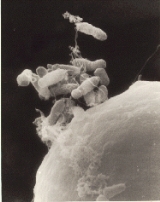
Agrobacterium tumefaciens (updated scientific name: Rhizobium radiobacter) is the causal agent of crown gall disease (the formation of tumours) in over 140 species of dicot. It is a rod shaped, Gram negative soil bacterium (Smith et al., 1907). Symptoms are caused by the insertion of a small segment of DNA
(known as the T-DNA, for 'transfer DNA') into the plant cell, which is incorporated at a semi-random location into the plant genome
.
Agrobacterium tumefaciens (or A. tumefaciens) is an alphaproteobacterium
of the family Rhizobiaceae
, which includes the nitrogen fixing
legume symbionts. Unlike the nitrogen fixing symbionts, tumor producing Agrobacterium are pathogenic and do not benefit the plant. The wide variety of plants affected by Agrobacterium makes it of great concern to the agriculture industry.
Economically, A. tumefaciens is a serious pathogen
of walnuts, grape vines, stone fruits, nut
trees, sugar beets, horse radish and rhubarb
.
(Ti plasmid or pTi), of 200 kb, which contains the T-DNA and all the gene
s necessary to transfer it to the plant cell. Many strains of A. tumefaciens do not contain a pTi.
Since the Ti plasmid is essential to cause disease, pre-penetration events in the rhizosphere
occur to promote bacterial conjugation
- exchange of plasmids amongst bacteria. In the presence of opines
, A. tumefaciens produces a diffusible conjugation signal called 30C8HSL or the Agrobacterium autoinducer. This activates the transcription factor
TraR, positively regulating the transcription
of genes required for conjugation.
A. tumefaciens have flagella that allow them to swim through the soil
towards photoassimilate
s that accumulate in the rhizosphere
around roots. Some strains
may chemotactically
move towards chemical exudates from plants, such as acetosyringone
and sugars. The former is recognised by the VirA protein, a transmembrane protein encoded in the virA gene on the Ti plasmid. Sugars are recognised by the chvE protein, a chromosomal gene-encoded protein located in the periplasmic space.
At least 25 vir genes on the Ti plasmid are necessary for tumor induction. In addition to their perception role, virA and chvE induce other vir genes. The virA protein has kinase
activity: it phosphorylates
itself on a histidine residue. Then the virA protein phosphorylates the virG protein on its aspartate residue. The virG protein is a cytoplasmic protein produced from the virG Ti plasmid gene. It is a transcription factor
, inducing the transcription of the vir operon
s. The chvE protein regulates the second mechanism of the vir genes' activation. It increases VirA protein sensibility to phenolic compounds.
Attachment is a two-step process. Following an initial weak and reversible attachment, the bacteria synthesize cellulose
fibril
s that anchor them to the wounded plant cell to which they were attracted. Four main gene
s are involved in this process: chvA, chvB, pscA and att. It appears that the products of the first three genes are involved in the actual synthesis of the cellulose fibrils. These fibrils also anchor the bacteria to each other, helping to form a microcolony.
After production of cellulose fibrils a calcium-dependent
outer membrane protein
called rhicadhesin is produced, which also aids in sticking the bacteria to the cell wall. Homologue
s of this protein can be found in other Rhizobia species.
Possible plant compounds that initiate Agrobacterium to infect plant cells:
A. tumefaciens uses a Type IV secretion mechanism, involving the production of a T-pilus
. When acetosyringone and other substances are detected, a signal transduction
event activates the expression of 11 genes within the VirB operon
which are responsible for the formation of the T-pilus.
The pro-pilin is formed first. This is a polypeptide of 121 amino acids which requires processing by the removal of 47 residues to form a T-pilus subunit. The subunit is circularized by the formation of a peptide bond
between the two ends of the polypeptide.
Products of the other VirB genes are used to transfer the subunits across the plasma membrane. Yeast two-hybrid studies provide evidence that VirB6, VirB7, VirB8, VirB9 and VirB10 may all encode
components of the transporter. An ATPase
for the active transport
of the subunits would also be required.
that leads to the nucleoprotein complex being targeted to the type IV secretion system (T4SS).
In the cytoplasm of the recipient cell, the T-DNA complex becomes coated with VirE2 proteins, which are exported through the T4SS independently from the T-DNA complex.
Nuclear localization signal
s, or NLS, located on the VirE2 and VirD2 are recognised by the importin alpha protein, which then associates with importin beta and the nuclear pore complex to transfer the T-DNA into the nucleus
. VIP1 also appears to be an important protein in the process, possibly acting as an adapter to bring the VirE2 to the importin. Once inside the nucleus, VIP2 may target the T-DNA to areas of chromatin
that are being actively transcribed, so that the T-DNA can integrate into the host genome.
formation, the T-DNA encodes genes for the production of auxin
or indole-3-acetic acid via the IAM pathway. This biosynthetic pathway is not used in many plants for the production of auxin, so it means the plant has no molecular means of regulating it and auxin will be produced constitutively. Genes for the production of cytokinin
s are also expressed. This stimulates cell proliferation and gall formation.
s which the bacteria can metabolize, called opines. Opines
are a class of chemicals that serve as a source of nitrogen for A. tumefaciens, but not for most other organisms. The specific type of opine produced by A. tumefaciens C58 infected plants is nopaline
(Escobar et al., 2003).
Two nopaline type Ti plasmids, pTi-SAKURA and pTiC58, were fully sequenced. A. tumefaciens C58, the first fully sequenced pathovar
, was first isolated from a cherry tree crown gall. The genome was simultaneously sequenced by Goodner et al. and Wood et al. in 2001. The genome of A. tumefaciens C58 consists of a circular chromosome, two plasmid
s, and a linear chromosome
. The presence of a covalently bonded circular chromosome is common to Bacteria, with few exceptions. However, the presence of both a single circular chromosome and single linear chromosome is unique to a group in this genus. The two plasmids are pTiC58, responsible for the processes involved in virulence
, and pAtC58, coined the “cryptic
” plasmid.
The pAtC58 plasmid has been shown to be involved in the metabolism of opines and to conjugate with other bacteria in the absence of the pTiC58 plasmid. If the pTi plasmid is removed, the tumor growth that is the means of classifying this species of bacteria does not occur.
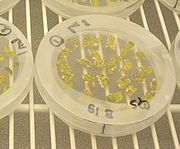 The DNA transmission capabilities of Agrobacterium have been extensively exploited in biotechnology
as a means of inserting foreign genes into plants. Marc Van Montagu
and Jeff Schell, (University of Ghent and Plant Genetic Systems
, Belgium
) discovered the gene transfer mechanism between Agrobacterium and plants, which resulted in the development of methods to alter the bacterium into an efficient delivery system for genetic engineering
in plants. The plasmid T-DNA that is transferred to the plant is an ideal vehicle for genetic engineering. This is done by cloning a desired gene sequence into the T-DNA that will be inserted into the host DNA. This process has been performed using firefly luciferase
gene to produce glowing plants. This luminescence
has been a useful device in the study of plant chloroplast function and as a reporter gene
. It is also possible to transform Arabidopsis thaliana
by dipping their flowers into a broth of Agrobacterium: the seed produced will be transgenic. Under laboratory conditions the T-DNA has also been transferred to human cells, demonstrating the diversity of insertion application.
The mechanism by which Agrobacterium inserts materials into the host cell by a type IV secretion system is very similar to mechanisms used by pathogens to insert materials (usually proteins) into human cells by type III secretion. It also employs a type of signaling conserved in many Gram-negative bacteria called quorum sensing
. This makes Agrobacterium an important topic of medical research as well.
DNA
Deoxyribonucleic acid is a nucleic acid that contains the genetic instructions used in the development and functioning of all known living organisms . The DNA segments that carry this genetic information are called genes, but other DNA sequences have structural purposes, or are involved in...
(known as the T-DNA, for 'transfer DNA') into the plant cell, which is incorporated at a semi-random location into the plant genome
Genome
In modern molecular biology and genetics, the genome is the entirety of an organism's hereditary information. It is encoded either in DNA or, for many types of virus, in RNA. The genome includes both the genes and the non-coding sequences of the DNA/RNA....
.
Agrobacterium tumefaciens (or A. tumefaciens) is an alphaproteobacterium
Proteobacteria
The Proteobacteria are a major group of bacteria. They include a wide variety of pathogens, such as Escherichia, Salmonella, Vibrio, Helicobacter, and many other notable genera....
of the family Rhizobiaceae
Rhizobiaceae
The Rhizobiaceae are a family of proteobacteria, including many species of rhizobia as well as plant parasites like Agrobacterium. Rhizobiaceae are, like all Proteobacteria, gram-negative. They are aerobic and the cells are usually rod-shaped. Many species of the Rhizobiaceae are diazotrophs, they...
, which includes the nitrogen fixing
Nitrogen fixation
Nitrogen fixation is the natural process, either biological or abiotic, by which nitrogen in the atmosphere is converted into ammonia . This process is essential for life because fixed nitrogen is required to biosynthesize the basic building blocks of life, e.g., nucleotides for DNA and RNA and...
legume symbionts. Unlike the nitrogen fixing symbionts, tumor producing Agrobacterium are pathogenic and do not benefit the plant. The wide variety of plants affected by Agrobacterium makes it of great concern to the agriculture industry.
Economically, A. tumefaciens is a serious pathogen
Pathogen
A pathogen gignomai "I give birth to") or infectious agent — colloquially, a germ — is a microbe or microorganism such as a virus, bacterium, prion, or fungus that causes disease in its animal or plant host...
of walnuts, grape vines, stone fruits, nut
Nut (fruit)
A nut is a hard-shelled fruit of some plants having an indehiscent seed. While a wide variety of dried seeds and fruits are called nuts in English, only a certain number of them are considered by biologists to be true nuts...
trees, sugar beets, horse radish and rhubarb
Rhubarb
Rhubarb is a group of plants that belong to the genus Rheum in the family Polygonaceae. They are herbaceous perennial plants growing from short, thick rhizomes. They have large leaves that are somewhat triangular-shaped with long fleshy petioles...
.
Conjugation
In order to be virulent, the bacterium must contain a tumour-inducing plasmidTi plasmid
Ti plasmid is a circular plasmid that often, but not always, is a part of the genetic equipment that Agrobacterium tumefaciens and Agrobacterium rhizogenes use to transduce its genetic material to plants. Ti stands for tumor inducing. The Ti plasmid is lost when Agrobacterium is grown above 28°C....
(Ti plasmid or pTi), of 200 kb, which contains the T-DNA and all the gene
Gene
A gene is a molecular unit of heredity of a living organism. It is a name given to some stretches of DNA and RNA that code for a type of protein or for an RNA chain that has a function in the organism. Living beings depend on genes, as they specify all proteins and functional RNA chains...
s necessary to transfer it to the plant cell. Many strains of A. tumefaciens do not contain a pTi.
Since the Ti plasmid is essential to cause disease, pre-penetration events in the rhizosphere
Rhizosphere (ecology)
The rhizosphere is the narrow region of soil that is directly influenced by root secretions and associated soil microorganisms. Soil which is not part of the rhizosphere is known as bulk soil. The rhizosphere contains many bacteria that feed on sloughed-off plant cells, termed rhizodeposition, and...
occur to promote bacterial conjugation
Bacterial conjugation
Bacterial conjugation is the transfer of genetic material between bacterial cells by direct cell-to-cell contact or by a bridge-like connection between two cells...
- exchange of plasmids amongst bacteria. In the presence of opines
Opines
Opines are low molecular weight compounds found in plant crown gall tumors or hairy root tumors produced by parasitic bacteria of the genus Agrobacterium. Opine biosynthesis is catalyzed by specific enzymes encoded by genes contained in a small segment of DNA , which is part of the Ti plasmid,...
, A. tumefaciens produces a diffusible conjugation signal called 30C8HSL or the Agrobacterium autoinducer. This activates the transcription factor
Transcription factor
In molecular biology and genetics, a transcription factor is a protein that binds to specific DNA sequences, thereby controlling the flow of genetic information from DNA to mRNA...
TraR, positively regulating the transcription
Transcription (genetics)
Transcription is the process of creating a complementary RNA copy of a sequence of DNA. Both RNA and DNA are nucleic acids, which use base pairs of nucleotides as a complementary language that can be converted back and forth from DNA to RNA by the action of the correct enzymes...
of genes required for conjugation.
Method of infection
The Agrobacterium tumefaciens infects the plant through its Ti plasmid. The Ti plasmid integrates a segment of its DNA, known as T-DNA, into the chromosomal DNA of its host plant cells.A. tumefaciens have flagella that allow them to swim through the soil
Soil
Soil is a natural body consisting of layers of mineral constituents of variable thicknesses, which differ from the parent materials in their morphological, physical, chemical, and mineralogical characteristics...
towards photoassimilate
Photoassimilate
In botany, a photoassimilate is one of a number of biological compounds formed by assimilation using light-dependent reactions. This term is most commonly used to refer to the energy-storing monosaccharides produced by photosynthesis in the leaves of plants....
s that accumulate in the rhizosphere
Rhizosphere (ecology)
The rhizosphere is the narrow region of soil that is directly influenced by root secretions and associated soil microorganisms. Soil which is not part of the rhizosphere is known as bulk soil. The rhizosphere contains many bacteria that feed on sloughed-off plant cells, termed rhizodeposition, and...
around roots. Some strains
Strain (biology)
In biology, a strain is a low-level taxonomic rank used in three related ways.-Microbiology and virology:A strain is a genetic variant or subtype of a micro-organism . For example, a "flu strain" is a certain biological form of the influenza or "flu" virus...
may chemotactically
Chemotaxis
Chemotaxis is the phenomenon in which somatic cells, bacteria, and other single-cell or multicellular organisms direct their movements according to certain chemicals in their environment. This is important for bacteria to find food by swimming towards the highest concentration of food molecules,...
move towards chemical exudates from plants, such as acetosyringone
Acetosyringone
Acetosyringone is a phenolic natural product, and is a chemical compound related to acetophenone and 2,6-dimethoxyphenol. It was first described in relation to lignan/phenylpropanoid-type phytochemicals, with isolation from a variety of plant sources, in particular, in relation to wounding and...
and sugars. The former is recognised by the VirA protein, a transmembrane protein encoded in the virA gene on the Ti plasmid. Sugars are recognised by the chvE protein, a chromosomal gene-encoded protein located in the periplasmic space.
At least 25 vir genes on the Ti plasmid are necessary for tumor induction. In addition to their perception role, virA and chvE induce other vir genes. The virA protein has kinase
Kinase
In chemistry and biochemistry, a kinase is a type of enzyme that transfers phosphate groups from high-energy donor molecules, such as ATP, to specific substrates, a process referred to as phosphorylation. Kinases are part of the larger family of phosphotransferases...
activity: it phosphorylates
Phosphorylation
Phosphorylation is the addition of a phosphate group to a protein or other organic molecule. Phosphorylation activates or deactivates many protein enzymes....
itself on a histidine residue. Then the virA protein phosphorylates the virG protein on its aspartate residue. The virG protein is a cytoplasmic protein produced from the virG Ti plasmid gene. It is a transcription factor
Transcription factor
In molecular biology and genetics, a transcription factor is a protein that binds to specific DNA sequences, thereby controlling the flow of genetic information from DNA to mRNA...
, inducing the transcription of the vir operon
Operon
In genetics, an operon is a functioning unit of genomic DNA containing a cluster of genes under the control of a single regulatory signal or promoter. The genes are transcribed together into an mRNA strand and either translated together in the cytoplasm, or undergo trans-splicing to create...
s. The chvE protein regulates the second mechanism of the vir genes' activation. It increases VirA protein sensibility to phenolic compounds.
Attachment is a two-step process. Following an initial weak and reversible attachment, the bacteria synthesize cellulose
Cellulose
Cellulose is an organic compound with the formula , a polysaccharide consisting of a linear chain of several hundred to over ten thousand β linked D-glucose units....
fibril
Fibril
Fibril is a fine fiber approximately 1 nm in diameter.Cytoplasmic fibrils are observed on the protoplasmic cylinders found in most spirochetal species, although no function of the cytoplasmic fibrils has been ascribed....
s that anchor them to the wounded plant cell to which they were attracted. Four main gene
Gene
A gene is a molecular unit of heredity of a living organism. It is a name given to some stretches of DNA and RNA that code for a type of protein or for an RNA chain that has a function in the organism. Living beings depend on genes, as they specify all proteins and functional RNA chains...
s are involved in this process: chvA, chvB, pscA and att. It appears that the products of the first three genes are involved in the actual synthesis of the cellulose fibrils. These fibrils also anchor the bacteria to each other, helping to form a microcolony.
After production of cellulose fibrils a calcium-dependent
Calcium in biology
Calcium plays a pivotal role in the physiology and biochemistry of organisms and the cell. It plays an important role in signal transduction pathways, where it acts as a second messenger, in neurotransmitter release from neurons, contraction of all muscle cell types, and fertilization...
outer membrane protein
Protein
Proteins are biochemical compounds consisting of one or more polypeptides typically folded into a globular or fibrous form, facilitating a biological function. A polypeptide is a single linear polymer chain of amino acids bonded together by peptide bonds between the carboxyl and amino groups of...
called rhicadhesin is produced, which also aids in sticking the bacteria to the cell wall. Homologue
Homology (biology)
Homology forms the basis of organization for comparative biology. In 1843, Richard Owen defined homology as "the same organ in different animals under every variety of form and function". Organs as different as a bat's wing, a seal's flipper, a cat's paw and a human hand have a common underlying...
s of this protein can be found in other Rhizobia species.
Possible plant compounds that initiate Agrobacterium to infect plant cells:
- AcetosyringoneAcetosyringoneAcetosyringone is a phenolic natural product, and is a chemical compound related to acetophenone and 2,6-dimethoxyphenol. It was first described in relation to lignan/phenylpropanoid-type phytochemicals, with isolation from a variety of plant sources, in particular, in relation to wounding and...
: Phenolic compound - alpha-Hydroxyacetosyringone
- Catechol
- Ferulic acidFerulic acidFerulic acid is a hydroxycinnamic acid, a type of organic compound. It is an abundant phenolic phytochemical found in plant cell wall components such as arabinoxylans as covalent side chains. It is related to trans-cinnamic acid. As a component of lignin, ferulic acid is a precursor in the...
- Gallic acidGallic acidGallic acid is a trihydroxybenzoic acid, a type of phenolic acid, a type of organic acid, also known as 3,4,5-trihydroxybenzoic acid, found in gallnuts, sumac, witch hazel, tea leaves, oak bark, and other plants. The chemical formula is C6H23COOH. Gallic acid is found both free and as part of...
- p-Hydroxybenzoic acid4-Hydroxybenzoic acid4-Hydroxybenzoic acid is a monohydroxybenzoic acid, a phenolic derivative of benzoic acid. It is a white crystalline solid that is slightly soluble in water and chloroform but more soluble in polar organic solvents such as alcohols and acetone...
- Protocatechuic acidProtocatechuic acidProtocatechuic acid is a dihydroxybenzoic acid, a type of phenolic acid. It has mixed effects on normal and cancer cells in in vitro and in vivo studies.-Biological effects:...
- Pyrogallic acid
- Resorcylic acid
- Sinapinic acidSinapinic acidSinapinic acid, or sinapic acid , is a small naturally occurring hydroxycinnamic acid. It is a member of the phenylpropanoid family. It is a commonly used matrix in MALDI mass spectrometry. It is a useful matrix for a wide variety of peptides and proteins...
- Syringic acidSyringic acidSyringic acid is a naturally occurring O-methylated trihydroxybenzoic acid, a type of chemical compound. It can be found in the açaí palm and its oil , in Ardisia elliptica...
- VanillinVanillinVanillin is a phenolic aldehyde, an organic compound with the molecular formula C8H8O3. Its functional groups include aldehyde, ether, and phenol. It is the primary component of the extract of the vanilla bean. It is also found in Leptotes bicolor, roasted coffee and the Chinese red pine...
Formation of the T-pilus
In order to transfer the T-DNA into the plant cellPlant cell
Plant cells are eukaryotic cells that differ in several key respects from the cells of other eukaryotic organisms. Their distinctive features include:...
A. tumefaciens uses a Type IV secretion mechanism, involving the production of a T-pilus
Pilus
right|thumb|350px|Schematic drawing of bacterial conjugation. 1- Donor cell produces pilus. 2- Pilus attaches to recipient cell, brings the two cells together. 3- The mobile plasmid is nicked and a single strand of DNA is then transferred to the recipient cell...
. When acetosyringone and other substances are detected, a signal transduction
Signal transduction
Signal transduction occurs when an extracellular signaling molecule activates a cell surface receptor. In turn, this receptor alters intracellular molecules creating a response...
event activates the expression of 11 genes within the VirB operon
Operon
In genetics, an operon is a functioning unit of genomic DNA containing a cluster of genes under the control of a single regulatory signal or promoter. The genes are transcribed together into an mRNA strand and either translated together in the cytoplasm, or undergo trans-splicing to create...
which are responsible for the formation of the T-pilus.
The pro-pilin is formed first. This is a polypeptide of 121 amino acids which requires processing by the removal of 47 residues to form a T-pilus subunit. The subunit is circularized by the formation of a peptide bond
Peptide bond
This article is about the peptide link found within biological molecules, such as proteins. A similar article for synthetic molecules is being created...
between the two ends of the polypeptide.
Products of the other VirB genes are used to transfer the subunits across the plasma membrane. Yeast two-hybrid studies provide evidence that VirB6, VirB7, VirB8, VirB9 and VirB10 may all encode
Encode
Encode may refer to:* Can be related to "Code"* Encode ApS, a Danish software company* Encode SA, a Greek information security company* ENCODE, the ENCyclopedia Of DNA Elements...
components of the transporter. An ATPase
ATPase
ATPases are a class of enzymes that catalyze the decomposition of adenosine triphosphate into adenosine diphosphate and a free phosphate ion. This dephosphorylation reaction releases energy, which the enzyme harnesses to drive other chemical reactions that would not otherwise occur...
for the active transport
Active transport
Active transport is the movement of a substance against its concentration gradient . In all cells, this is usually concerned with accumulating high concentrations of molecules that the cell needs, such as ions, glucose, and amino acids. If the process uses chemical energy, such as from adenosine...
of the subunits would also be required.
Transfer of T-DNA into the plant cell
The T-DNA must be cut out of the circular plasmid. A VirD1/D2 complex nicks the DNA at the left and right border sequences. The VirD2 protein is covalently attached to the 5' end. VirD2 contains a motifSequence motif
In genetics, a sequence motif is a nucleotide or amino-acid sequence pattern that is widespread and has, or is conjectured to have, a biological significance...
that leads to the nucleoprotein complex being targeted to the type IV secretion system (T4SS).
In the cytoplasm of the recipient cell, the T-DNA complex becomes coated with VirE2 proteins, which are exported through the T4SS independently from the T-DNA complex.
Nuclear localization signal
Nuclear localization signal
A nuclear localization signal or sequence is an amino acid sequence which 'tags' a protein for import into the cell nucleus by nuclear transport. Typically, this signal consists of one or more short sequences of positively charged lysines or arginines exposed on the protein surface. Different...
s, or NLS, located on the VirE2 and VirD2 are recognised by the importin alpha protein, which then associates with importin beta and the nuclear pore complex to transfer the T-DNA into the nucleus
Cell nucleus
In cell biology, the nucleus is a membrane-enclosed organelle found in eukaryotic cells. It contains most of the cell's genetic material, organized as multiple long linear DNA molecules in complex with a large variety of proteins, such as histones, to form chromosomes. The genes within these...
. VIP1 also appears to be an important protein in the process, possibly acting as an adapter to bring the VirE2 to the importin. Once inside the nucleus, VIP2 may target the T-DNA to areas of chromatin
Chromatin
Chromatin is the combination of DNA and proteins that make up the contents of the nucleus of a cell. The primary functions of chromatin are; to package DNA into a smaller volume to fit in the cell, to strengthen the DNA to allow mitosis and meiosis and prevent DNA damage, and to control gene...
that are being actively transcribed, so that the T-DNA can integrate into the host genome.
Hormones
In order to cause gallGall
Galls or cecidia are outgrowths on the surface of lifeforms caused by invasion by other lifeforms, such as parasites or bacterial infection. Plant galls are abnormal outgrowths of plant tissues and can be caused by various parasites, from fungi and bacteria, to insects and mites...
formation, the T-DNA encodes genes for the production of auxin
Auxin
Auxins are a class of plant hormones with some morphogen-like characteristics. Auxins have a cardinal role in coordination of many growth and behavioral processes in the plant's life cycle and are essential for plant body development. Auxins and their role in plant growth were first described by...
or indole-3-acetic acid via the IAM pathway. This biosynthetic pathway is not used in many plants for the production of auxin, so it means the plant has no molecular means of regulating it and auxin will be produced constitutively. Genes for the production of cytokinin
Cytokinin
Cytokinins are a class of plant growth substances that promote cell division, or cytokinesis, in plant roots and shoots. They are involved primarily in cell growth and differentiation, but also affect apical dominance, axillary bud growth, and leaf senescence...
s are also expressed. This stimulates cell proliferation and gall formation.
Opines
The T-DNA contains genes for encoding enzymes that cause the plant to create specialized amino acidAmino acid
Amino acids are molecules containing an amine group, a carboxylic acid group and a side-chain that varies between different amino acids. The key elements of an amino acid are carbon, hydrogen, oxygen, and nitrogen...
s which the bacteria can metabolize, called opines. Opines
Opines
Opines are low molecular weight compounds found in plant crown gall tumors or hairy root tumors produced by parasitic bacteria of the genus Agrobacterium. Opine biosynthesis is catalyzed by specific enzymes encoded by genes contained in a small segment of DNA , which is part of the Ti plasmid,...
are a class of chemicals that serve as a source of nitrogen for A. tumefaciens, but not for most other organisms. The specific type of opine produced by A. tumefaciens C58 infected plants is nopaline
Nopaline
Nopaline is one of the Opines. Ti plasmids are classified on the basis of the different types of Opines they produce. These may be Nopaline plasmids, Octopine Plasmids and Agropine Plasmids. These Opines are condensation products of amino acids and keto acids or may be from sugar. The Opines are...
(Escobar et al., 2003).
Two nopaline type Ti plasmids, pTi-SAKURA and pTiC58, were fully sequenced. A. tumefaciens C58, the first fully sequenced pathovar
Pathovar
A pathovar is a bacterial strain or set of strains with the same or similar characteristics, that is differentiated at infrasubspecific level from other strains of the same species or subspecies on the basis of distinctive pathogenicity to one or more plant hosts.Pathovars are named as a ternary or...
, was first isolated from a cherry tree crown gall. The genome was simultaneously sequenced by Goodner et al. and Wood et al. in 2001. The genome of A. tumefaciens C58 consists of a circular chromosome, two plasmid
Plasmid
In microbiology and genetics, a plasmid is a DNA molecule that is separate from, and can replicate independently of, the chromosomal DNA. They are double-stranded and, in many cases, circular...
s, and a linear chromosome
Chromosome
A chromosome is an organized structure of DNA and protein found in cells. It is a single piece of coiled DNA containing many genes, regulatory elements and other nucleotide sequences. Chromosomes also contain DNA-bound proteins, which serve to package the DNA and control its functions.Chromosomes...
. The presence of a covalently bonded circular chromosome is common to Bacteria, with few exceptions. However, the presence of both a single circular chromosome and single linear chromosome is unique to a group in this genus. The two plasmids are pTiC58, responsible for the processes involved in virulence
Virulence
Virulence is by MeSH definition the degree of pathogenicity within a group or species of parasites as indicated by case fatality rates and/or the ability of the organism to invade the tissues of the host. The pathogenicity of an organism - its ability to cause disease - is determined by its...
, and pAtC58, coined the “cryptic
Cryptic
Cryptic can refer to:* Crypsis, of animals that are difficult to observe* Cryptic crossword, a crossword with cryptic clues* Cryptic era, earliest period of the Earth* Cryptic, an album by Edge of Sanity* Cryptic Writings, an album by Megadeth...
” plasmid.
The pAtC58 plasmid has been shown to be involved in the metabolism of opines and to conjugate with other bacteria in the absence of the pTiC58 plasmid. If the pTi plasmid is removed, the tumor growth that is the means of classifying this species of bacteria does not occur.
Beneficial uses
Biotechnology
Biotechnology is a field of applied biology that involves the use of living organisms and bioprocesses in engineering, technology, medicine and other fields requiring bioproducts. Biotechnology also utilizes these products for manufacturing purpose...
as a means of inserting foreign genes into plants. Marc Van Montagu
Marc Van Montagu
Marc Van Montagu is a Belgian molecular biologist. He was full Professor and director of the Laboratory of Genetics at the faculty of Sciences at Ghent University and scientific director of the Genetics Department of the Flanders Interuniversity Institute for Biotechnology...
and Jeff Schell, (University of Ghent and Plant Genetic Systems
Plant Genetic Systems
Plant Genetic Systems , since 2002 part of Bayer CropScience, is a biotech company located in Ghent, Belgium. The focus of its activities is the genetic engineering of plants...
, Belgium
Belgium
Belgium , officially the Kingdom of Belgium, is a federal state in Western Europe. It is a founding member of the European Union and hosts the EU's headquarters, and those of several other major international organisations such as NATO.Belgium is also a member of, or affiliated to, many...
) discovered the gene transfer mechanism between Agrobacterium and plants, which resulted in the development of methods to alter the bacterium into an efficient delivery system for genetic engineering
Genetic engineering
Genetic engineering, also called genetic modification, is the direct human manipulation of an organism's genome using modern DNA technology. It involves the introduction of foreign DNA or synthetic genes into the organism of interest...
in plants. The plasmid T-DNA that is transferred to the plant is an ideal vehicle for genetic engineering. This is done by cloning a desired gene sequence into the T-DNA that will be inserted into the host DNA. This process has been performed using firefly luciferase
Luciferase
Luciferase is a generic term for the class of oxidative enzymes used in bioluminescence and is distinct from a photoprotein. One famous example is the firefly luciferase from the firefly Photinus pyralis. "Firefly luciferase" as a laboratory reagent usually refers to P...
gene to produce glowing plants. This luminescence
Luminescence
Luminescence is emission of light by a substance not resulting from heat; it is thus a form of cold body radiation. It can be caused by chemical reactions, electrical energy, subatomic motions, or stress on a crystal. This distinguishes luminescence from incandescence, which is light emitted by a...
has been a useful device in the study of plant chloroplast function and as a reporter gene
Reporter gene
In molecular biology, a reporter gene is a gene that researchers attach to a regulatory sequence of another gene of interest in cell culture, animals or plants. Certain genes are chosen as reporters because the characteristics they confer on organisms expressing them are easily identified and...
. It is also possible to transform Arabidopsis thaliana
Arabidopsis thaliana
Arabidopsis thaliana is a small flowering plant native to Europe, Asia, and northwestern Africa. A spring annual with a relatively short life cycle, arabidopsis is popular as a model organism in plant biology and genetics...
by dipping their flowers into a broth of Agrobacterium: the seed produced will be transgenic. Under laboratory conditions the T-DNA has also been transferred to human cells, demonstrating the diversity of insertion application.
The mechanism by which Agrobacterium inserts materials into the host cell by a type IV secretion system is very similar to mechanisms used by pathogens to insert materials (usually proteins) into human cells by type III secretion. It also employs a type of signaling conserved in many Gram-negative bacteria called quorum sensing
Quorum sensing
Quorum sensing is a system of stimulus and response correlated to population density. Many species of bacteria use quorum sensing to coordinate gene expression according to the density of their local population. In similar fashion, some social insects use quorum sensing to determine where to nest...
. This makes Agrobacterium an important topic of medical research as well.
External links
- Agrobacterium tumefacien C58 Genome Page — as sequenced by Cereon Genomics/University of Richmond
- Agrobacterium tumefacien C58 Genome Page — as sequenced by DuPont/Univ of Washington/Univ of Campinas