

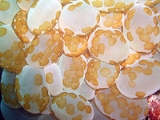
Acoelomorpha

Encyclopedia
The Acoelomorpha are a disputed phylum
of animals with planula-like
features that were considered to belong to the phylum Platyhelminthes
. In 2004 molecular studies demonstrated that they are a separate phylum, although their position in the tree of life is contentious; most researchers believe them to be basal
among the Bilateria
, slightly more derived than the cnidaria. Recent (2011) results suggest that they (along with Xenoturbella
) may lie near the base of the deuterostomes.
Earlier (2007) work dismissed the phylum as paraphyletic
, with Acoela
and Nemertodermatida
as separate clades.
An ongoing (Feb. 2011) collaborative research project has "the researchers ... confident that they can reach an agreement about where acoels fit in evolutionary history.
Acoels are almost entirely marine
, living between grains of sediment
, swimming as plankton
, or crawling on algae
. Acoels have a statocyst
, which presumably helps them orient to gravity. Their soft bodies make them difficult to classify.
about 15 mm), that do not have a gut
. Digestion is accomplished by means of a syncytium
that forms a vacuole
around ingested food. There are no epithelial
cells lining the digestive vacuole, although there is sometimes a short pharynx
leading from the mouth to the vacuole. All other bilateral animals (apart from tapeworms) have a gut lined with epithelial cells. As a result, the acoels appear to be solid-bodied (a-coel, or no body cavity).
Acoelomorphs resemble flatworms in many respects, but have a simpler anatomy, even beyond the absence of a gut. Like flatworms, they have no circulatory or respiratory systems, but they also lack an excretory system. They have no true brain or ganglia
, simply a network of nerves beneath the epidermis
, although the nerves are slightly more concentrated towards the forward end of the animal. The sensory organs include a statocyst
and, in some cases, very primitive pigment-spot ocelli
capable of detecting light.
They are simultaneous hermaphrodite
s, but have no gonad
s, and no ducts associated with the female reproductive system. Instead, gamete
s are produced from the mesenchymal
cells that fill the body between the epidermis and the digestive vacuole.
Phylum
In biology, a phylum The term was coined by Georges Cuvier from Greek φῦλον phylon, "race, stock," related to φυλή phyle, "tribe, clan." is a taxonomic rank below kingdom and above class. "Phylum" is equivalent to the botanical term division....
of animals with planula-like
Planula
A planula is the free-swimming, flattened, ciliated, bilaterally symmetric larval form of various cnidarian species. The planula forms from the fertilized egg of a medusa, as the case in scyphozoans and some hydrozoans, or from a polyp, as in the case of anthozoans...
features that were considered to belong to the phylum Platyhelminthes
Flatworm
The flatworms, known in scientific literature as Platyhelminthes or Plathelminthes are a phylum of relatively simple bilaterian, unsegmented, soft-bodied invertebrate animals...
. In 2004 molecular studies demonstrated that they are a separate phylum, although their position in the tree of life is contentious; most researchers believe them to be basal
Basal (phylogenetics)
In phylogenetics, a basal clade is the earliest clade to branch in a larger clade; it appears at the base of a cladogram.A basal group forms an outgroup to the rest of the clade, such as in the following example:...
among the Bilateria
Bilateria
The bilateria are all animals having a bilateral symmetry, i.e. they have a front and a back end, as well as an upside and downside. Radially symmetrical animals like jellyfish have a topside and downside, but no front and back...
, slightly more derived than the cnidaria. Recent (2011) results suggest that they (along with Xenoturbella
Xenoturbella
Xenoturbella is a genus of bilaterian animals; it contains two marine worm-like species. The first known species was discovered in 1915 by Sixten Bock but the first published description was only in 1949 by Einar Westblad...
) may lie near the base of the deuterostomes.
Earlier (2007) work dismissed the phylum as paraphyletic
Paraphyly
A group of taxa is said to be paraphyletic if the group consists of all the descendants of a hypothetical closest common ancestor minus one or more monophyletic groups of descendants...
, with Acoela
Acoela
Acoela is an order of animals treated either as a group of flatworms or as one of the two classes of the phylum Acoelomorpha, containing the majority of that phylum's species. It contains about 20 families....
and Nemertodermatida
Nemertodermatida
Nemertodermatida is a group of bilaterians.But see: et al. 2011: Acoelomorph flatworms are deuterostomes related to Xenoturbella. Nature, 470: 255–258....
as separate clades.
An ongoing (Feb. 2011) collaborative research project has "the researchers ... confident that they can reach an agreement about where acoels fit in evolutionary history.
Acoels are almost entirely marine
Marine (ocean)
Marine is an umbrella term. As an adjective it is usually applicable to things relating to the sea or ocean, such as marine biology, marine ecology and marine geology...
, living between grains of sediment
Sediment
Sediment is naturally occurring material that is broken down by processes of weathering and erosion, and is subsequently transported by the action of fluids such as wind, water, or ice, and/or by the force of gravity acting on the particle itself....
, swimming as plankton
Plankton
Plankton are any drifting organisms that inhabit the pelagic zone of oceans, seas, or bodies of fresh water. That is, plankton are defined by their ecological niche rather than phylogenetic or taxonomic classification...
, or crawling on algae
Algae
Algae are a large and diverse group of simple, typically autotrophic organisms, ranging from unicellular to multicellular forms, such as the giant kelps that grow to 65 meters in length. They are photosynthetic like plants, and "simple" because their tissues are not organized into the many...
. Acoels have a statocyst
Statocyst
The statocyst is a balance sensory receptor present in some aquatic invertebrates, including bivalves, cnidarians, echinoderms, cephalopods, and crustaceans. A similar structure is also found in Xenoturbella. The statocyst consists of a sac-like structure containing a mineralised mass and numerous...
, which presumably helps them orient to gravity. Their soft bodies make them difficult to classify.
Anatomy
The Acoela are very small flattened worms, usually under 2 millimetre (0.078740157480315 in) in length (Symsagittifera roscoffensisSymsagittifera roscoffensis
Symsagittifera roscoffensis, formerly called Convoluta roscoffensis, is a free-living acoelomorph worm.-Appearance:Symsagittifera roscoffensis is a small flat worm. Due to the algae, Tetraselmis convolutae, which it assimilates into its body cavity, it has green colour...
about 15 mm), that do not have a gut
Gut (zoology)
In zoology, the gut, also known as the alimentary canal or alimentary tract, is a tube by which bilaterian animals transfer food to the digestion organs. In large bilaterians the gut generally also has an exit, the anus, by which the animal disposes of solid wastes...
. Digestion is accomplished by means of a syncytium
Syncytium
In biology, a syncytium is a large cell-like structure; filled with cytoplasm and containing many nuclei. Most cells in eukaryotic organisms have a single nucleus; syncytia are specialized forms used by various organisms.The term may also refer to cells that are connected by specialized membrane...
that forms a vacuole
Vacuole
A vacuole is a membrane-bound organelle which is present in all plant and fungal cells and some protist, animal and bacterial cells. Vacuoles are essentially enclosed compartments which are filled with water containing inorganic and organic molecules including enzymes in solution, though in certain...
around ingested food. There are no epithelial
Epithelium
Epithelium is one of the four basic types of animal tissue, along with connective tissue, muscle tissue and nervous tissue. Epithelial tissues line the cavities and surfaces of structures throughout the body, and also form many glands. Functions of epithelial cells include secretion, selective...
cells lining the digestive vacuole, although there is sometimes a short pharynx
Pharynx
The human pharynx is the part of the throat situated immediately posterior to the mouth and nasal cavity, and anterior to the esophagus and larynx. The human pharynx is conventionally divided into three sections: the nasopharynx , the oropharynx , and the laryngopharynx...
leading from the mouth to the vacuole. All other bilateral animals (apart from tapeworms) have a gut lined with epithelial cells. As a result, the acoels appear to be solid-bodied (a-coel, or no body cavity).
Acoelomorphs resemble flatworms in many respects, but have a simpler anatomy, even beyond the absence of a gut. Like flatworms, they have no circulatory or respiratory systems, but they also lack an excretory system. They have no true brain or ganglia
Ganglion
In anatomy, a ganglion is a biological tissue mass, most commonly a mass of nerve cell bodies. Cells found in a ganglion are called ganglion cells, though this term is also sometimes used to refer specifically to retinal ganglion cells....
, simply a network of nerves beneath the epidermis
Epidermis (zoology)
The Epidermis is an epithelium that covers the body of an eumetazoan . Eumetazoa have a cavity lined with a similar epithelium, the gastrodermis, which forms a boundary with the epidermis at the mouth.Sponges have no epithelium, and therefore no epidermis or gastrodermis...
, although the nerves are slightly more concentrated towards the forward end of the animal. The sensory organs include a statocyst
Statocyst
The statocyst is a balance sensory receptor present in some aquatic invertebrates, including bivalves, cnidarians, echinoderms, cephalopods, and crustaceans. A similar structure is also found in Xenoturbella. The statocyst consists of a sac-like structure containing a mineralised mass and numerous...
and, in some cases, very primitive pigment-spot ocelli
Ocellus
A simple eye refers to a type of eye design or optical arrangement that contains a single lens which detect light. A "simple eye" is so-called in distinction from a multi-lensed "compound eye", and is not necessarily at all simple in the usual sense of the word...
capable of detecting light.
They are simultaneous hermaphrodite
Hermaphrodite
In biology, a hermaphrodite is an organism that has reproductive organs normally associated with both male and female sexes.Many taxonomic groups of animals do not have separate sexes. In these groups, hermaphroditism is a normal condition, enabling a form of sexual reproduction in which both...
s, but have no gonad
Gonad
The gonad is the organ that makes gametes. The gonads in males are the testes and the gonads in females are the ovaries. The product, gametes, are haploid germ cells. For example, spermatozoon and egg cells are gametes...
s, and no ducts associated with the female reproductive system. Instead, gamete
Gamete
A gamete is a cell that fuses with another cell during fertilization in organisms that reproduce sexually...
s are produced from the mesenchymal
Mesenchyme
Mesenchyme, or mesenchymal connective tissue, is a type of undifferentiated loose connective tissue that is derived mostly from mesoderm, although some are derived from other germ layers; e.g. some mesenchyme is derived from neural crest cells and thus originates from the ectoderm...
cells that fill the body between the epidermis and the digestive vacuole.