
All Topics  
Abelia

 
Abelia

   Email Print
   Bookmark   Link


Abelia


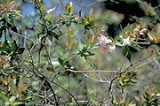
Abelia is a genus
Genus

A genus is a low-level taxonomic rank used in the classification of living and fossil organisms. The taxonomic ranks are domain , kingdom , phylum, class , order , family , genus, and species....
 of about 15-30 species
Species

In biology, a species is one of the basic units of biological classification and a taxonomic rank. A species is often defined as a group of organisms capable of interbreeding and producing fertile offspring....
 and many hybrids in the honeysuckle family Caprifoliaceae
Caprifoliaceae

The Caprifoliaceae or honeysuckle family is a clade consisting of about 800 dicotyledonous flowering plants, with a nearly cosmopolitan distribution; centres of diversity are found in eastern North America and eastern Asia, while they are absent in tropical and southern Africa....
, in the part of that family split off by some authors in the segregate
Segregate (taxonomy)

In Alpha taxonomy, a segregate, or a segregate taxon is created when a taxon is split off, from another taxon. This other taxon will be better known, usually bigger, and will continue to exist, even after the segregate taxon has been split off....
 family Linnaeaceae. The Angiosperm Phylogeny Group
Angiosperm Phylogeny Group

The Angiosperm Phylogeny Group, or APG, refers to two international groups of systematic botany who came together to try to establish a consensus view of the taxonomy of flowering plants that would reflect new knowledge in angiosperm relationships based upon molecular systematics studies....
 considers Linnaeaceae to encompass such genera as Linnaea, Abelia, Dipelta, Kolkwitzia, and Zabelia.

Abelias are shrub
Shrub

A shrub or bush is a horticulture rather than strictly Botany category of woody plant, distinguished from a tree by its multiple stems and lower height, usually less than 5-6 m tall....
s from 1-6 m tall, native to eastern Asia
Asia

Asia is the world's largest and most populous continent. It covers 8.6% of the Earth's total surface area and, with over 4 billion people, it contains more than 60% of the world's current human population....
 (Japan
Japan

Japan is an island country in East Asia. Located in the Pacific Ocean, it lies to the east of the Sea of Japan, People's Republic of China, North Korea, South Korea and Russia, stretching from the Sea of Okhotsk in the north to the East China Sea and Taiwan in the south....
 west to the Himalaya) and southern North America
North America

North America is the northern continent of the Americas, situated in the Earth's northern hemisphere and almost totally in the western hemisphere....
 (Mexico
Mexico

The United Mexican States , commonly known as Mexico , is a federalism constitutionalism republic in North America. It is bordered on the north by the United States; on the south and west by the Pacific Ocean; on the southeast by Guatemala, Belize, and the Caribbean Sea; and on the east by the Gulf of Mexico....
); the species from warm climates are evergreen
Evergreen

In botany, an evergreen plant is a plant having leaf all year round. This contrasts with deciduous plants, which completely lose their foliage for part of the year....
, and colder climate species deciduous
Deciduous

Deciduous means falling off at maturity or tending to fall off and is typically used in reference to trees or shrubs that lose their leaves seasonally and to the shedding of other plant structures such as petals after flowering or fruit when ripe....
.


Discussion
Ask a question about 'Abelia'
Start a new discussion about 'Abelia'
Answer questions from other users
Full Discussion Forum


Encyclopedia


Abelia is a genus
Genus

A genus is a low-level taxonomic rank used in the classification of living and fossil organisms. The taxonomic ranks are domain , kingdom , phylum, class , order , family , genus, and species....
 of about 15-30 species
Species

In biology, a species is one of the basic units of biological classification and a taxonomic rank. A species is often defined as a group of organisms capable of interbreeding and producing fertile offspring....
 and many hybrids in the honeysuckle family Caprifoliaceae
Caprifoliaceae

The Caprifoliaceae or honeysuckle family is a clade consisting of about 800 dicotyledonous flowering plants, with a nearly cosmopolitan distribution; centres of diversity are found in eastern North America and eastern Asia, while they are absent in tropical and southern Africa....
, in the part of that family split off by some authors in the segregate
Segregate (taxonomy)

In Alpha taxonomy, a segregate, or a segregate taxon is created when a taxon is split off, from another taxon. This other taxon will be better known, usually bigger, and will continue to exist, even after the segregate taxon has been split off....
 family Linnaeaceae. The Angiosperm Phylogeny Group
Angiosperm Phylogeny Group

The Angiosperm Phylogeny Group, or APG, refers to two international groups of systematic botany who came together to try to establish a consensus view of the taxonomy of flowering plants that would reflect new knowledge in angiosperm relationships based upon molecular systematics studies....
 considers Linnaeaceae to encompass such genera as Linnaea, Abelia, Dipelta, Kolkwitzia, and Zabelia.

Abelias are shrub
Shrub

A shrub or bush is a horticulture rather than strictly Botany category of woody plant, distinguished from a tree by its multiple stems and lower height, usually less than 5-6 m tall....
s from 1-6 m tall, native to eastern Asia
Asia

Asia is the world's largest and most populous continent. It covers 8.6% of the Earth's total surface area and, with over 4 billion people, it contains more than 60% of the world's current human population....
 (Japan
Japan

Japan is an island country in East Asia. Located in the Pacific Ocean, it lies to the east of the Sea of Japan, People's Republic of China, North Korea, South Korea and Russia, stretching from the Sea of Okhotsk in the north to the East China Sea and Taiwan in the south....
 west to the Himalaya) and southern North America
North America

North America is the northern continent of the Americas, situated in the Earth's northern hemisphere and almost totally in the western hemisphere....
 (Mexico
Mexico

The United Mexican States , commonly known as Mexico , is a federalism constitutionalism republic in North America. It is bordered on the north by the United States; on the south and west by the Pacific Ocean; on the southeast by Guatemala, Belize, and the Caribbean Sea; and on the east by the Gulf of Mexico....
); the species from warm climates are evergreen
Evergreen

In botany, an evergreen plant is a plant having leaf all year round. This contrasts with deciduous plants, which completely lose their foliage for part of the year....
, and colder climate species deciduous
Deciduous

Deciduous means falling off at maturity or tending to fall off and is typically used in reference to trees or shrubs that lose their leaves seasonally and to the shedding of other plant structures such as petals after flowering or fruit when ripe....
. The leaves
Leaf

In botany, a leaf is an above-ground plant Organ specialized for photosynthesis. For this purpose, a leaf is typically flat and thin, to expose the cells containing chloroplast to light over a broad area, and to allow light to penetrate fully into the tissues....
 are opposite or in whorls of three, ovate, glossy, dark green, 1.5-8 cm long, turning purplish-bronze to red in autumn in the deciduous species. The flower
Flower

A flower, sometimes known as a bloom or blossom, is the reproduction structure found in flowering plants . The biological function of a flower is to mediate the union of male sperm with female ovum in order to produce seeds....
s appear in the upper leaf axils and stem ends, 1-8 together in a short cyme
Cyme

Cyme or CYME can refer to:* Cyme, a kind of Inflorescence#Organisation *Kymi, ancient Cumae, a city in Euboea, Greece*Cyme or Kymi, ancient Greek colony on the coast of Aeolia, present-day Namurt in Turkey...
; they are pendulous, white to pink, bell-shaped with a five-lobed corolla, 1-5 cm long, and usually scented. Flowering continues over a long and continuous late spring to fall period.

Selected species
  • Abelia aitchinsonii
  • Abelia biflora - (China)
  • Abelia buddleioides - (China)
  • Abelia chinensis - (China)
  • Abelia coriacea - (Mexico)
  • Abelia corymbosa
    Abelia corymbosa

    Abelia corymbosa is a species of Abelia described by Eduard August von Regel and Johannes Theodor Schmalhausen. The plant inhabits Central Asia....
     - (Central Asia)
  • Abelia curviflora - (Japan)
  • Abelia dielsii - (China)
  • Abelia engleriana - (Sichuan, China)
  • Abelia fargesii - (Japan)
  • Abelia floribunda - Mexican Abelia (Mexico)
  • Abelia forrestii - (China)
  • Abelia integrifolia - (Japan)
  • Abelia ionostachya - (Japan)
  • Abelia macrotera - (China)
  • Abelia mexicana - (Mexico)
  • Abelia mosanensis - (Korea)
  • Abelia occidentalis - (Mexico)
  • Abelia parvifolia - (China)
  • Abelia serrata - (Japan)
  • Abelia spathulata - (Japan)
  • Abelia speciosa - (Mexico)
  • Abelia tomentosa - (Japan)
  • Abelia taihyonii - (Korea)
  • Abelia triflora - (Himalaya)
  • Abelia umbellata - (Sichuan, China)


  • Hybrids
    • Abelia x grandiflora
      Abelia x grandiflora

      Abelia ? grandiflora is a Hybrid Abelia, raised by hybridising Abelia with Abelia. It is a deciduous or semi-evergreen multi-stemmed shrub with rounded, spreading, or gracefully arching branches to 1-1.8 m tall....
       Hort. ex. Bailey

    Cultivation and uses

    Abelias are popular garden
    Garden

    A garden is a planned space, usually outdoors, set aside for the display, cultivation, and enjoyment of plants and other forms of nature. The garden can incorporate both natural and man-made materials....
     shrubs. The most widely grown is the hybrid Abelia x grandiflora
    Abelia x grandiflora

    Abelia ? grandiflora is a Hybrid Abelia, raised by hybridising Abelia with Abelia. It is a deciduous or semi-evergreen multi-stemmed shrub with rounded, spreading, or gracefully arching branches to 1-1.8 m tall....
     (Glossy Abelia; hybrid Abelia chinensis x Abelia uniflora). This is a rounded, spreading, multi-stemmed shrub with gracefully arching branches to 1-1.8 m tall, with ovate, glossy, dark green semi-evergreen leaves to 2-6 cm long, and clusters of white-tinged-pink, bell-shaped flowers to 2 cm long.

    Abelia species are used as food plants by the larva
    Larva

    A larva is a young form of animal with indirect developmental biology, going through or undergoing metamorphosis .The larva can look completely different from the adult form, for example, a caterpillar differs from a butterfly....
    e of some Lepidoptera
    Lepidoptera

    Lepidoptera is an order of insect that includes moths and butterfly. It is one of the most speciose orders in the class Insecta, encompassing moths and the three superfamilies of butterfly, skipper , and Hedylidae....
     species - see list of Lepidoptera that feed on Abelia
    List of Lepidoptera that feed on Abelia

    Abelia spp are used as food plants by the larvae of the following Lepidoptera species:*Acleris - recorded on A. spathulata*Agrapha - recorded on A....
    .