

AVNOJ

Encyclopedia
The Anti-Fascist Council of the People's Liberation of Yugoslavia, known more commonly by its Yugoslav abbreviation AVNOJ, (Serbo-Croatian
: Antifašističko Vijeće Narodnog Oslobođenja Jugoslavije, AVNOJ) was the political umbrella organization
for the national liberation councils of the Yugoslav resistance against the World War II Axis occupation, eventually becoming the Yugoslav provisional wartime deliberative body. The AVNOJ was established on November 26, 1942 to administer terrorities under the Partisans' control. It was under the political leadership of the main resistance forces of Yugoslavia, during the Axis
occupation of World War II
.
 After the Yugoslavian army capitulated on April 17, 1941, Yugoslavia was distributed between Germany
, Italy
, Bulgaria
, Hungary
and the newly formed puppet state
s: Independent State of Croatia
, Independent State of Montenegro, Albanian Kingdom
and Nedić Serbia. Opposition to these occupation regimes caused the formation of resistance movements, resulting in the Communist Party of Yugoslavia (CPY), then only active in the underground but fast gaining popularity, assuming the role of leading the forces in the Yugoslavian resistance. The CPY as an organisation comprised people from, and drew support from, the whole of Yugoslavia; as such, it represented a single Yugoslav
identity.
On November 26, 1942, the Partisan
leaders of Yugoslavia convened the first AVNOJ meeting at Bihać
, in the northwest of Bosnia
, in the hope of gaining political legitimacy. Comprising a committee of both the communist and non-communist Partisan representatives, under Josip Broz Tito, AVNOJ proclaimed support for:
In January 1943, Germany mounted a fourth large-scale anti-partisan offensive to strengthen its control of Yugoslavia by destroying the central command of the Partisan movement – the Central Committee of the CPY – and the primary Partisan hospital. The Partisans, outnumbered and engaged in major battles with the Chetnik formations of Colonel Draža Mihajlović, Ustasha militias and the combined German
and Italian
regular forces, were steadily forced into retreat until an elaborate deception plan allowed the Partisans to escape their pursuers. Despite the tactical defeat and the loss of men and equipment, the Partisan central command remained intact and the hospital safe which, over time, enabled the continuation of further operations against the enemy. All the major strategic military offensives of the Axis
and their collaborators were ultimately thwarted.
In May of the same year, German, Italian, Bulgarian and Croatian troops launched a fifth concerted offensive against the Partisans in south eastern Bosnia, near the Sutjeska river. Again, faced by superior enemy numbers and potential encirclement, the Partisans escaped defeat but not without cost. However, the fact that after their successful breakout the Partisans were still able to mount major counter offensives proved to be a turning point in the battle for control of Yugoslavia. When Italy surrendered in September, the Partisans were further aided by captured Italian armour, control of additional coastal territory, and the shipment of supplies from the Allies in Italy.
 In its second AVNOJ conference in the Bosnian
town of Jajce
, from November 21 to November 29, 1943, Tito declared AVNOJ to be the superior executive authority. The decisions and the resolutions
of the second AVNOJ conference were:
Note: the AVNOJ denied all rights to people of German ancestry in the Provisions of the AVNOJ in Jajce, 1943
On 21 Nov. 1943, the AVNOJ decided on the following provisions ‘On the Deprivation of
Civil Rights’,
In the years to come, this formed the legal basis for the treatment of the Danube Swabians
, whom they called Germans in Yugoslavia, including the creation of many labor and Concentration camps:
1. All persons of German nationality living in Yugoslavia automatically lose their
Yugoslavian citizenship as well as all civil rights.
2. The entire movable and immovable possessions of all persons of German nationality
are confiscated by the state and henceforth its property.
3. Persons of German nationality are neither allowed to claim or exercise any rights, nor
to use courts or other institutions for their personal or legal protection.
No existing text of these resolutions remains available to historians. See also de:AVNOJ-Beschlüsse
Stalin
, the Soviet
leader, was enraged when he found out that he was not being informed of the November meeting, and reportedly barred Tito from declaring AVNOJ as a provisional government
. The Western Allies, however, were not alarmed, because they knew that the Partisans were the only Yugoslav resistance group actively fighting the Germans.
In December 1943, Roosevelt
, Churchill
, and Stalin decided to support the Partisans. The United Kingdom
joined a month later, and stopped supplying the Chetniks
. The first Soviet mission arrived at Partisan headquarters, shortly thereafter. The United States
kept a military mission with Mihajlović to encourage continued Chetnik aid for downed American flier
s.
In May 1944, German airborne forces attacked Tito's headquarters in Drvar, nearly capturing him. Tito fled to Italy, and established a new headquarters on the Adriatic island of Vis
. After throwing its full support to the Partisans, Britain worked to reconcile Tito and Petar. At Britain's urging, Petar agreed to remain outside Yugoslavia, and in September, summoned all Yugoslavs to back the Partisans.
One year after the formulation of the resolutions at Jajce they were revised and affirmed on 21. November 1944 in Belgrade
, shortly after the city was taken on 20. October by The Red Army and the partisans under the leadership of Josip Broz Tito
. One of the resolutions dealt with:
"the decree about the transition of hostile goods to be turned into state property; about the public administration of the property of absent persons and seizure of the property alienated by force from the occupying powers“.
After this all possessions of the German Reich and its citizens, on the territory of Yugoslavia “ as well as all possessions of persons of German nationality, except those Germans who fought as members of the national liberation army and the partisan units of Yugoslavia or who are citizens of neutral states, who did not behave hostilely during the Occupation “, should become the property of the new Yugoslav state.
Besides this all possessions of the war criminals and their accomplices without consideration for their nationality and the fortune of each person, who was condemned, is seized by judgment of the civilian or military courts to become the possession of the state “.
On 6. February 1945 , the decree of 21. November 1944 was transferred to the legislation of the Republic of Yugoslavia, was incorporated into the Confiscation Law of 9. June 1945 and also into the law for agrarian reform
of 23. August 1945. The law dealing with the voting lists of 10. August 1945 specified that "members of the military formations of the Occupiers and their native accomplices, and those who continuously and actively fought against the liberation army of Yugoslavia and/or. against the Yugoslav army or against the armies of the confederates of Yugoslavia” are all denied the active right to vote. Moreover, the existence of these resolutions are confirmed in the establishment status of the autonomous area Vojvodina
, which was created by decree of the presidency of the Serbian representative government (Sluzbeni glass NIC Srbije of 9. September 1945) where a guarantee was made in article 4 „to all nationalities the full equal rights as a citizen of Serbia with exception of the German nationality, that due to the decision of the AVNOJ of 21. November 1944 the civic rights (drzavljanska prava) were taken away. “ The AVNOJ resolutions became law on 1. December 1945 explains Leon Geršković and E. Zellweger. As a result, the Flight and expulsion of the Danube Swabians (1944-1948) began as part of the Flight and expulsion of Germans (1944–1950) and more than 170,000 Yugoslavian Danube Swabians were declared to be Germans and deported into many labor and concentration camps in Yugoslavia. c.f.List of concentration and internment camps
Serbo-Croatian language
Serbo-Croatian or Serbo-Croat, less commonly Bosnian/Croatian/Serbian , is a South Slavic language with multiple standards and the primary language of Serbia, Croatia, Bosnia and Herzegovina, and Montenegro...
: Antifašističko Vijeće Narodnog Oslobođenja Jugoslavije, AVNOJ) was the political umbrella organization
Umbrella organization
An umbrella organization is an association of institutions, who work together formally to coordinate activities or pool resources. In business, political, or other environments, one group, the umbrella organization, provides resources and often an identity to the smaller organizations...
for the national liberation councils of the Yugoslav resistance against the World War II Axis occupation, eventually becoming the Yugoslav provisional wartime deliberative body. The AVNOJ was established on November 26, 1942 to administer terrorities under the Partisans' control. It was under the political leadership of the main resistance forces of Yugoslavia, during the Axis
Axis Powers
The Axis powers , also known as the Axis alliance, Axis nations, Axis countries, or just the Axis, was an alignment of great powers during the mid-20th century that fought World War II against the Allies. It began in 1936 with treaties of friendship between Germany and Italy and between Germany and...
occupation of World War II
World War II
World War II, or the Second World War , was a global conflict lasting from 1939 to 1945, involving most of the world's nations—including all of the great powers—eventually forming two opposing military alliances: the Allies and the Axis...
.
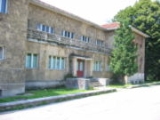
First Session of the AVNOJ
Nazi Germany
Nazi Germany , also known as the Third Reich , but officially called German Reich from 1933 to 1943 and Greater German Reich from 26 June 1943 onward, is the name commonly used to refer to the state of Germany from 1933 to 1945, when it was a totalitarian dictatorship ruled by...
, Italy
Kingdom of Italy (1861–1946)
The Kingdom of Italy was a state forged in 1861 by the unification of Italy under the influence of the Kingdom of Sardinia, which was its legal predecessor state...
, Bulgaria
Kingdom of Bulgaria
The Kingdom of Bulgaria was established as an independent state when the Principality of Bulgaria, an Ottoman vassal, officially proclaimed itself independent on October 5, 1908 . This move also formalised the annexation of the Ottoman province of Eastern Rumelia, which had been under the control...
, Hungary
Kingdom of Hungary (1920–1946)
The Kingdom of Hungary also known as the Regency, existed from 1920 to 1946 and was a de facto country under Regent Miklós Horthy. Horthy officially represented the abdicated Hungarian monarchy of Charles IV, Apostolic King of Hungary...
and the newly formed puppet state
Puppet state
A puppet state is a nominal sovereign of a state who is de facto controlled by a foreign power. The term refers to a government controlled by the government of another country like a puppeteer controls the strings of a marionette...
s: Independent State of Croatia
Independent State of Croatia
The Independent State of Croatia was a World War II puppet state of Nazi Germany, established on a part of Axis-occupied Yugoslavia. The NDH was founded on 10 April 1941, after the invasion of Yugoslavia by the Axis powers. All of Bosnia and Herzegovina was annexed to NDH, together with some parts...
, Independent State of Montenegro, Albanian Kingdom
Albania under Italy
The Albanian Kingdom existed as a protectorate of the Kingdom of Italy. It was practically a union between Italy and Albania, officially led by Italy's King Victor Emmanuel III and its government: Albania was led by Italian governors, after being militarily occupied by Italy, from 1939 until 1943...
and Nedić Serbia. Opposition to these occupation regimes caused the formation of resistance movements, resulting in the Communist Party of Yugoslavia (CPY), then only active in the underground but fast gaining popularity, assuming the role of leading the forces in the Yugoslavian resistance. The CPY as an organisation comprised people from, and drew support from, the whole of Yugoslavia; as such, it represented a single Yugoslav
Yugoslavs
Yugoslavs is a national designation used by a minority of South Slavs across the countries of the former Yugoslavia and in the diaspora...
identity.
On November 26, 1942, the Partisan
Partisans (Yugoslavia)
The Yugoslav Partisans, or simply the Partisans were a Communist-led World War II anti-fascist resistance movement in Yugoslavia...
leaders of Yugoslavia convened the first AVNOJ meeting at Bihać
Bihac
Bihać is a city and municipality on the river Una in the north-western part of Bosnia and Herzegovina, in the Bosanska Krajina region. Bihać is located in the Una-Sana Canton in the Federation of Bosnia and Herzegovina.-History:...
, in the northwest of Bosnia
Bosnia and Herzegovina
Bosnia and Herzegovina , sometimes called Bosnia-Herzegovina or simply Bosnia, is a country in Southern Europe, on the Balkan Peninsula. Bordered by Croatia to the north, west and south, Serbia to the east, and Montenegro to the southeast, Bosnia and Herzegovina is almost landlocked, except for the...
, in the hope of gaining political legitimacy. Comprising a committee of both the communist and non-communist Partisan representatives, under Josip Broz Tito, AVNOJ proclaimed support for:
- democracyDemocracyDemocracy is generally defined as a form of government in which all adult citizens have an equal say in the decisions that affect their lives. Ideally, this includes equal participation in the proposal, development and passage of legislation into law...
; - the rights of ethnic minoritiesEthnic groupAn ethnic group is a group of people whose members identify with each other, through a common heritage, often consisting of a common language, a common culture and/or an ideology that stresses common ancestry or endogamy...
; - the inviolability of private propertyPrivate propertyPrivate property is the right of persons and firms to obtain, own, control, employ, dispose of, and bequeath land, capital, and other forms of property. Private property is distinguishable from public property, which refers to assets owned by a state, community or government rather than by...
; and - freedom of individual economic initiative for the different groups.
In January 1943, Germany mounted a fourth large-scale anti-partisan offensive to strengthen its control of Yugoslavia by destroying the central command of the Partisan movement – the Central Committee of the CPY – and the primary Partisan hospital. The Partisans, outnumbered and engaged in major battles with the Chetnik formations of Colonel Draža Mihajlović, Ustasha militias and the combined German
Wehrmacht
The Wehrmacht – from , to defend and , the might/power) were the unified armed forces of Nazi Germany from 1935 to 1945. It consisted of the Heer , the Kriegsmarine and the Luftwaffe .-Origin and use of the term:...
and Italian
Royal Italian Army
The Regio Esercito was the army of the Kingdom of Italy from the unification of Italy in 1861 to the birth of the Italian Republic in 1946...
regular forces, were steadily forced into retreat until an elaborate deception plan allowed the Partisans to escape their pursuers. Despite the tactical defeat and the loss of men and equipment, the Partisan central command remained intact and the hospital safe which, over time, enabled the continuation of further operations against the enemy. All the major strategic military offensives of the Axis
Axis Powers
The Axis powers , also known as the Axis alliance, Axis nations, Axis countries, or just the Axis, was an alignment of great powers during the mid-20th century that fought World War II against the Allies. It began in 1936 with treaties of friendship between Germany and Italy and between Germany and...
and their collaborators were ultimately thwarted.
In May of the same year, German, Italian, Bulgarian and Croatian troops launched a fifth concerted offensive against the Partisans in south eastern Bosnia, near the Sutjeska river. Again, faced by superior enemy numbers and potential encirclement, the Partisans escaped defeat but not without cost. However, the fact that after their successful breakout the Partisans were still able to mount major counter offensives proved to be a turning point in the battle for control of Yugoslavia. When Italy surrendered in September, the Partisans were further aided by captured Italian armour, control of additional coastal territory, and the shipment of supplies from the Allies in Italy.
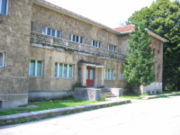
Second Session of the AVNOJ
Bosnia and Herzegovina
Bosnia and Herzegovina , sometimes called Bosnia-Herzegovina or simply Bosnia, is a country in Southern Europe, on the Balkan Peninsula. Bordered by Croatia to the north, west and south, Serbia to the east, and Montenegro to the southeast, Bosnia and Herzegovina is almost landlocked, except for the...
town of Jajce
Jajce
Jajce is a city and municipality located in the central part of Bosnia and Herzegovina. It is part of the Central Bosnia Canton of the Federation of Bosnia and Herzegovina entity...
, from November 21 to November 29, 1943, Tito declared AVNOJ to be the superior executive authority. The decisions and the resolutions
Resolution (law)
A resolution is a written motion adopted by a deliberative body. The substance of the resolution can be anything that can normally be proposed as a motion. For long or important motions, though, it is often better to have them written out so that discussion is easier or so that it can be...
of the second AVNOJ conference were:
- to create a federalFederalismFederalism is a political concept in which a group of members are bound together by covenant with a governing representative head. The term "federalism" is also used to describe a system of the government in which sovereignty is constitutionally divided between a central governing authority and...
Yugoslavia, based on the right of self-determination of nations, in which the southern Slavic peoplesSlavic peoplesThe Slavic people are an Indo-European panethnicity living in Eastern Europe, Southeast Europe, North Asia and Central Asia. The term Slavic represents a broad ethno-linguistic group of people, who speak languages belonging to the Slavic language family and share, to varying degrees, certain...
(SerbsSerbsThe Serbs are a South Slavic ethnic group of the Balkans and southern Central Europe. Serbs are located mainly in Serbia, Montenegro and Bosnia and Herzegovina, and form a sizable minority in Croatia, the Republic of Macedonia and Slovenia. Likewise, Serbs are an officially recognized minority in...
, CroatsCroatsCroats are a South Slavic ethnic group mostly living in Croatia, Bosnia and Herzegovina and nearby countries. There are around 4 million Croats living inside Croatia and up to 4.5 million throughout the rest of the world. Responding to political, social and economic pressure, many Croats have...
, Slovenes, Montenegrins, BosniaksBosniaksThe Bosniaks or Bosniacs are a South Slavic ethnic group, living mainly in Bosnia and Herzegovina, with a smaller minority also present in other lands of the Balkan Peninsula especially in Serbia, Montenegro and Croatia...
and MacedoniansMacedonians (ethnic group)The Macedonians also referred to as Macedonian Slavs: "... the term Slavomacedonian was introduced and was accepted by the community itself, which at the time had a much more widespread non-Greek Macedonian ethnic consciousness...
) who would live in six constituent republicRepublicA republic is a form of government in which the people, or some significant portion of them, have supreme control over the government and where offices of state are elected or chosen by elected people. In modern times, a common simplified definition of a republic is a government where the head of...
s with equal rightsCivil rightsCivil and political rights are a class of rights that protect individuals' freedom from unwarranted infringement by governments and private organizations, and ensure one's ability to participate in the civil and political life of the state without discrimination or repression.Civil rights include...
; - to stress that even during the War of National Liberation there had been established anti-fascist councils of the national liberation of Yugoslav lands for Serbia, Croatia, Slovenia, Bosnia and Herzegovina, Sandžak, Macedonia, and Montenegro and the Bay of KotorKotorKotor is a coastal city in Montenegro. It is located in a secluded part of the Gulf of Kotor. The city has a population of 13,510 and is the administrative center of the municipality....
as the organisations of the people's administration of the land; - to elect the National Committee of the Liberation of YugoslaviaNKOJThe National Committee for the Liberation of Yugoslavia or NKOJ , was the World War II provisional executive body of the Democratic Federal Yugoslavia. The NKOJ was elected by the AVNOJ during its Second Session in Jajce in late November of 1943. During the Session, the AVNOJ also appointed Josip...
(Nacionalni komitet oslobođenja Jugoslavije, NKOJ), based in Jajce, to act as the temporary government; - to name Tito, Marshal of YugoslaviaMarshal of YugoslaviaMarshal of Yugoslavia was the highest rank of Yugoslav People's Army , and, simultaneously, a Yugoslav honorific title...
and Prime MinisterPrime ministerA prime minister is the most senior minister of cabinet in the executive branch of government in a parliamentary system. In many systems, the prime minister selects and may dismiss other members of the cabinet, and allocates posts to members within the government. In most systems, the prime...
; - to revoke the Yugoslavian government-in-exile; and
- to deny King Petar II Karađorđević’s return to the country, until a popular referendumReferendumA referendum is a direct vote in which an entire electorate is asked to either accept or reject a particular proposal. This may result in the adoption of a new constitution, a constitutional amendment, a law, the recall of an elected official or simply a specific government policy. It is a form of...
had been held on the status of the monarchyMonarchyA monarchy is a form of government in which the office of head of state is usually held until death or abdication and is often hereditary and includes a royal house. In some cases, the monarch is elected...
.
Note: the AVNOJ denied all rights to people of German ancestry in the Provisions of the AVNOJ in Jajce, 1943
On 21 Nov. 1943, the AVNOJ decided on the following provisions ‘On the Deprivation of
Civil Rights’,
In the years to come, this formed the legal basis for the treatment of the Danube Swabians
Danube Swabians
The Danube Swabians is a collective term for the German-speaking population who lived in the former Kingdom of Hungary, especially alongside the Danube River valley. Because of different developments within the territory settled, the Danube Swabians cannot be seen as a unified people...
, whom they called Germans in Yugoslavia, including the creation of many labor and Concentration camps:
1. All persons of German nationality living in Yugoslavia automatically lose their
Yugoslavian citizenship as well as all civil rights.
2. The entire movable and immovable possessions of all persons of German nationality
are confiscated by the state and henceforth its property.
3. Persons of German nationality are neither allowed to claim or exercise any rights, nor
to use courts or other institutions for their personal or legal protection.
No existing text of these resolutions remains available to historians. See also de:AVNOJ-Beschlüsse
Stalin
Joseph Stalin
Joseph Vissarionovich Stalin was the Premier of the Soviet Union from 6 May 1941 to 5 March 1953. He was among the Bolshevik revolutionaries who brought about the October Revolution and had held the position of first General Secretary of the Communist Party of the Soviet Union's Central Committee...
, the Soviet
Soviet Union
The Soviet Union , officially the Union of Soviet Socialist Republics , was a constitutionally socialist state that existed in Eurasia between 1922 and 1991....
leader, was enraged when he found out that he was not being informed of the November meeting, and reportedly barred Tito from declaring AVNOJ as a provisional government
Provisional government
A provisional government is an emergency or interim government set up when a political void has been created by the collapse of a very large government. The early provisional governments were created to prepare for the return of royal rule...
. The Western Allies, however, were not alarmed, because they knew that the Partisans were the only Yugoslav resistance group actively fighting the Germans.
In December 1943, Roosevelt
Franklin D. Roosevelt
Franklin Delano Roosevelt , also known by his initials, FDR, was the 32nd President of the United States and a central figure in world events during the mid-20th century, leading the United States during a time of worldwide economic crisis and world war...
, Churchill
Winston Churchill
Sir Winston Leonard Spencer-Churchill, was a predominantly Conservative British politician and statesman known for his leadership of the United Kingdom during the Second World War. He is widely regarded as one of the greatest wartime leaders of the century and served as Prime Minister twice...
, and Stalin decided to support the Partisans. The United Kingdom
United Kingdom
The United Kingdom of Great Britain and Northern IrelandIn the United Kingdom and Dependencies, other languages have been officially recognised as legitimate autochthonous languages under the European Charter for Regional or Minority Languages...
joined a month later, and stopped supplying the Chetniks
Chetniks
Chetniks, or the Chetnik movement , were Serbian nationalist and royalist paramilitary organizations from the first half of the 20th century. The Chetniks were formed as a Serbian resistance against the Ottoman Empire in 1904, and participated in the Balkan Wars, World War I, and World War II...
. The first Soviet mission arrived at Partisan headquarters, shortly thereafter. The United States
United States
The United States of America is a federal constitutional republic comprising fifty states and a federal district...
kept a military mission with Mihajlović to encourage continued Chetnik aid for downed American flier
Aviator
An aviator is a person who flies an aircraft. The first recorded use of the term was in 1887, as a variation of 'aviation', from the Latin avis , coined in 1863 by G. de la Landelle in Aviation Ou Navigation Aérienne...
s.
In May 1944, German airborne forces attacked Tito's headquarters in Drvar, nearly capturing him. Tito fled to Italy, and established a new headquarters on the Adriatic island of Vis
Vis (island)
Vis is the most outerly lying larger Croatian island in the Adriatic Sea, and is part of the Central Dalmatian group of islands, with an area of 90.26 km² and a population of 3,617 . Of all the inhabited Croatian islands, it is the farthest from the coast...
. After throwing its full support to the Partisans, Britain worked to reconcile Tito and Petar. At Britain's urging, Petar agreed to remain outside Yugoslavia, and in September, summoned all Yugoslavs to back the Partisans.
AVNOJ Resolutions from November 1944
Translated from de:AVNOJ-BeschlüsseOne year after the formulation of the resolutions at Jajce they were revised and affirmed on 21. November 1944 in Belgrade
Belgrade
Belgrade is the capital and largest city of Serbia. It is located at the confluence of the Sava and Danube rivers, where the Pannonian Plain meets the Balkans. According to official results of Census 2011, the city has a population of 1,639,121. It is one of the 15 largest cities in Europe...
, shortly after the city was taken on 20. October by The Red Army and the partisans under the leadership of Josip Broz Tito
Josip Broz Tito
Marshal Josip Broz Tito – 4 May 1980) was a Yugoslav revolutionary and statesman. While his presidency has been criticized as authoritarian, Tito was a popular public figure both in Yugoslavia and abroad, viewed as a unifying symbol for the nations of the Yugoslav federation...
. One of the resolutions dealt with:
"the decree about the transition of hostile goods to be turned into state property; about the public administration of the property of absent persons and seizure of the property alienated by force from the occupying powers“.
After this all possessions of the German Reich and its citizens, on the territory of Yugoslavia “ as well as all possessions of persons of German nationality, except those Germans who fought as members of the national liberation army and the partisan units of Yugoslavia or who are citizens of neutral states, who did not behave hostilely during the Occupation “, should become the property of the new Yugoslav state.
Besides this all possessions of the war criminals and their accomplices without consideration for their nationality and the fortune of each person, who was condemned, is seized by judgment of the civilian or military courts to become the possession of the state “.
New laws starting in 1945
Translated from de:AVNOJ-BeschlüsseOn 6. February 1945 , the decree of 21. November 1944 was transferred to the legislation of the Republic of Yugoslavia, was incorporated into the Confiscation Law of 9. June 1945 and also into the law for agrarian reform
Agrarian reform
Agrarian reform can refer either, narrowly, to government-initiated or government-backed redistribution of agricultural land or, broadly, to an overall redirection of the agrarian system of the country, which often includes land reform measures. Agrarian reform can include credit measures,...
of 23. August 1945. The law dealing with the voting lists of 10. August 1945 specified that "members of the military formations of the Occupiers and their native accomplices, and those who continuously and actively fought against the liberation army of Yugoslavia and/or. against the Yugoslav army or against the armies of the confederates of Yugoslavia” are all denied the active right to vote. Moreover, the existence of these resolutions are confirmed in the establishment status of the autonomous area Vojvodina
Vojvodina
Vojvodina, officially called Autonomous Province of Vojvodina is an autonomous province of Serbia. Its capital and largest city is Novi Sad...
, which was created by decree of the presidency of the Serbian representative government (Sluzbeni glass NIC Srbije of 9. September 1945) where a guarantee was made in article 4 „to all nationalities the full equal rights as a citizen of Serbia with exception of the German nationality, that due to the decision of the AVNOJ of 21. November 1944 the civic rights (drzavljanska prava) were taken away. “ The AVNOJ resolutions became law on 1. December 1945 explains Leon Geršković and E. Zellweger. As a result, the Flight and expulsion of the Danube Swabians (1944-1948) began as part of the Flight and expulsion of Germans (1944–1950) and more than 170,000 Yugoslavian Danube Swabians were declared to be Germans and deported into many labor and concentration camps in Yugoslavia. c.f.List of concentration and internment camps
See also
- Yugoslav Partisans
- People's Liberation War
- Members of the Central Committee
- Yugoslavia
- Josip Broz TitoJosip Broz TitoMarshal Josip Broz Tito – 4 May 1980) was a Yugoslav revolutionary and statesman. While his presidency has been criticized as authoritarian, Tito was a popular public figure both in Yugoslavia and abroad, viewed as a unifying symbol for the nations of the Yugoslav federation...
- Edvard KardeljEdvard KardeljEdvard Kardelj also known under the pseudonyms Sperans and Krištof was a Yugoslav communist political leader, economist, partisan, publicist, and full member of the Serbian Academy of Sciences and Arts...
- Moša PijadeMoša PijadeMoša Pijade , nicknamed Čiča Janko was a prominent Yugoslavian/Serbian Communist of Sephardic Jewish origin, a close collaborator of Josip Broz Tito, former President of Yugoslavia, and full member of the Serbian Academy of Sciences and Arts.In his youth, Pijade was a...
- Milovan Djilas